
CapEx vs. OpEx
What is CapEx or capital expenditures?
What is OpEx or operational expenses?
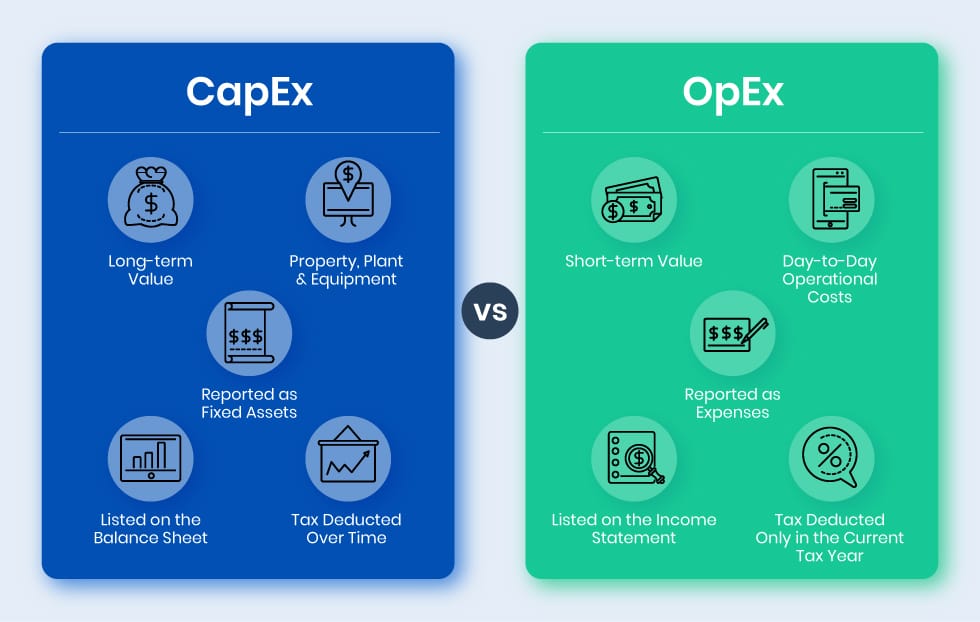
Capital Expenditures (CapEx)CapEx refers to funds a company uses to acquire, upgrade, or maintain long-term physical assets. These investments are intended to improve future performance or expand operational capacity beyond the current tax year.
- Accounting Treatment: Recorded as assets on the balance sheet. They are not expensed immediately; instead, their cost is spread over the asset's useful life through depreciation (for physical assets) or amortization (for intangible assets).
- Tax Impact: Not fully deductible in the year of purchase; tax benefits are realized gradually through annual depreciation.
- Examples:
- Real Estate: Purchasing land or buildings for factories and offices.
- Equipment: Manufacturing machinery, specialized tools, and delivery vehicles.
- Technology: Data centers, servers, and major software licenses.
- Intangibles: Acquiring patents, trademarks, or copyrights.
Operating Expenses (OpEx)OpEx represents the day-to-day costs required to keep a business running. These are short-term, recurring expenses for items typically consumed within the same accounting period they are purchased.
- Accounting Treatment: Reported entirely on the income statement. They directly reduce the company's net income for the period in which they are incurred.
- Tax Impact: Typically 100% tax-deductible in the year they are spent, providing immediate tax relief.
- Examples:
- Personnel: Salaries, wages, and benefits for administrative and sales staff.
- Facility Costs: Rent payments, property taxes, and utility bills (electricity, water, internet).
- Maintenance: Routine repairs that keep assets functional without extending their life.
- Services: Marketing, advertising, insurance premiums, and cloud-based subscriptions (SaaS).
Key Comparison Summary
| Feature | CapEx (Capital) | OpEx (Operational) |
|---|---|---|
| Primary Goal | Future growth and expansion | Day-to-day operations |
| Duration | Benefits last > 1 year | Benefits used within < 1 year |
| Payment | Large, upfront, or one-time | Small, regular, recurring |
| Financial Statement | Balance Sheet (Asset) | Income Statement (Expense) |
| Risk Level | High (large outlays, uncertain ROI) | Low (flexible, easy to adjust) |
source: grok.com


Comments ()